
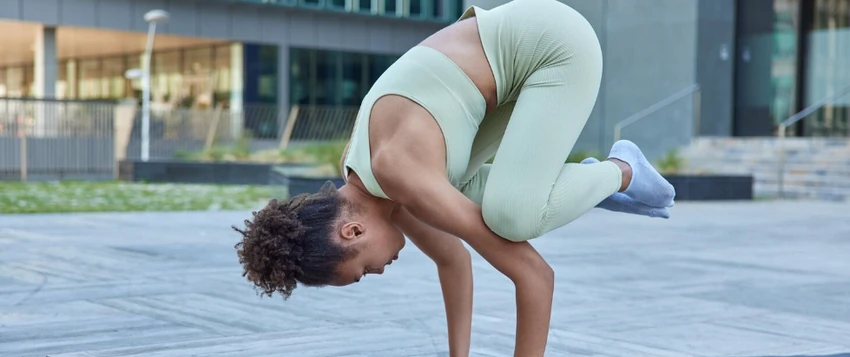
Balance exercises can help you move with greater control during everyday activities, workouts and recreational movement. Whether you are walking on uneven ground, climbing stairs, standing from a chair or changing direction, balance plays an important role in how confidently your body responds.
Balance is not only about standing on one leg. Instead, it involves coordination between your muscles, joints, vision, inner ear and nervous system. These systems work together to help you maintain control while standing still or moving.
However, balance may receive less attention than strength, flexibility or cardiovascular fitness. Long periods of inactivity, limited movement variety, ageing, previous injuries and reduced lower-body strength may all affect how stable a person feels.
Fortunately, balance can be practised through simple movements. You do not need advanced equipment or a complicated training programme to begin. A few controlled exercises performed consistently can help build greater body awareness and movement confidence.
Healthi supports a balanced approach to wellness through fitness services, movement classes and activities that encourage strength, flexibility, coordination and healthy movement.
This guide explains what balance exercises are, their potential benefits and how beginners can create a practical daily balance routine.
What are balance exercises?
Balance exercises are movements that challenge your ability to remain steady while standing still or moving.
They often involve muscle control, coordination, posture, joint stability and body awareness.
For example, standing on one leg requires the muscles around your ankles, knees, hips and core to work together. Your body must also make small adjustments to prevent you from losing stability.
Similarly, walking heel to toe challenges coordination and control because your base of support becomes narrower.
Balance exercises may be included in a warm-up, home workout, rehabilitation programme, strength-training session, movement class or daily wellness routine.
The goal is not to create instability that feels unsafe. Instead, balance training should challenge your body while allowing you to maintain control.
Why is balance important?
Balance supports many movements that people perform every day.
It helps when you:
- Walk and change direction
- Step over obstacles
- Climb stairs
- Get into or out of a chair
- Carry groceries
- Exercise
- Move across uneven surfaces
- Recover from a small loss of stability
Good balance also supports coordination between the upper and lower body.
For example, reaching for an object while standing requires your body to adjust its position without losing control.
Static vs dynamic balance: what is the difference?
Static and dynamic balance are related, but they are not exactly the same.
Static balance refers to maintaining control while remaining mostly still.
Examples include standing with your feet close together or balancing on one leg.
Dynamic balance refers to maintaining control while moving.
Examples include walking, stepping sideways, changing direction or reaching while standing.
Therefore, a balanced routine should ideally include both static and dynamic exercises.
What are the benefits of balance training?
Regular balance practice may support how confidently and efficiently you move.
Balance exercises may help to:
- Improve body awareness
- Support coordination
- Strengthen the muscles around the ankles, knees and hips
- Improve posture and control
- Support walking and movement confidence
- Complement strength and mobility training
- Prepare the body for recreational activities
- Encourage movement during sedentary days
Balance training may also help people become more aware of differences between the left and right sides of the body.
However, balance exercises should not be used as a replacement for medical assessment when dizziness, frequent falls, weakness or unexplained instability is present.
Balance exercises for beginners
Beginner balance exercises should be simple, controlled and easy to modify.
Use a stable chair, wall or countertop for support when needed.
1. Feet-together balance
Stand with your feet together and your weight evenly distributed.
Keep your posture tall and look straight ahead.
Hold the position for 20 to 30 seconds.
To make the exercise easier, keep one hand on a stable surface.
2. Semi-tandem stance
Place one foot slightly in front of the other.
The heel of the front foot should be near the middle of the back foot.
Hold the position while keeping your body upright.
Switch sides after 20 to 30 seconds.
3. Heel-to-toe stance
Place one foot directly in front of the other, as though you are standing on a narrow line.
Use a wall or chair for support.
Hold the position briefly before switching feet.
4. Single-leg balance
Stand tall and lift one foot slightly from the floor.
Keep the standing knee soft rather than locked.
Hold the position for 10 to 20 seconds before changing sides.
Use support whenever necessary.
5. Weight shifts
Stand with your feet about hip-width apart.
Slowly shift your weight towards one side without lifting your feet.
Return to the centre and move to the other side.
This exercise helps you practise controlled movement within your base of support.
Balance exercises for lower-body control
Lower-body strength contributes to stability during standing and movement.
The following exercises combine balance with simple strength work.
Chair-assisted squats
Stand in front of a stable chair.
Bend your knees and hips as though you are going to sit down.
Pause before reaching the chair, then return to standing.
Use the chair for support when needed.
Heel raises
Stand behind a chair and hold it lightly.
Slowly lift your heels from the floor.
Pause briefly, then lower them with control.
Heel raises help strengthen the lower legs and ankles.
Toe raises
Keep your heels on the floor and lift your toes.
Pause, then lower them slowly.
This movement may help improve control around the ankles.
Side leg lifts
Stand tall while holding a chair.
Lift one leg slightly to the side without leaning.
Lower the leg with control and repeat on the other side.
Dynamic balance exercises
Dynamic balance exercises involve movement and direction changes.
Heel-to-toe walking
Walk forward by placing the heel of one foot directly in front of the toes of the other.
Move slowly and use a wall for support if necessary.
Side stepping
Take several controlled steps to one side.
Keep your feet facing forward and avoid rushing.
Repeat in the opposite direction.
Marching in place
Lift one knee at a time while maintaining an upright posture.
Start with small movements and hold a chair when needed.
Step taps
Stand in front of a low step or stable object.
Tap one foot onto the step and return it to the floor.
Alternate sides while maintaining control.
Core exercises that support balance
Your core helps stabilise your trunk while your arms and legs move.
Beginner-friendly core exercises may include:
- Seated knee lifts
- Standing abdominal bracing
- Bird-dog movements
- Glute bridges
- Slow marching
- Supported standing reaches
Core training should focus on control rather than fast movement.
A simple daily balance routine
A short balance routine may take five to ten minutes.
1. Preparation
Begin with one minute of relaxed walking or marching in place.
Stand near a wall or stable chair.
2. Static balance
Perform:
- Feet-together balance for 20 seconds
- Semi-tandem stance for 20 seconds on each side
- Single-leg balance for 10 seconds on each side
3. Lower-body control
Complete:
- Eight chair-assisted squats
- Ten heel raises
- Eight side leg lifts on each side
4. Dynamic balance
Perform:
- Ten slow marching steps
- Five heel-to-toe steps
- Five side steps in each direction
5. Finish
End with relaxed walking and slow breathing.
The routine should feel controlled rather than rushed.
Can you do balance exercises at home?
Most beginner balance exercises can be performed at home without specialised equipment.
You may only need:
- A stable chair
- A clear floor space
- A wall or countertop
- Comfortable clothing
- Supportive footwear
- An exercise mat for floor-based movements
Remove loose rugs, cables and other obstacles before beginning.
Avoid practising near stairs or unstable furniture.
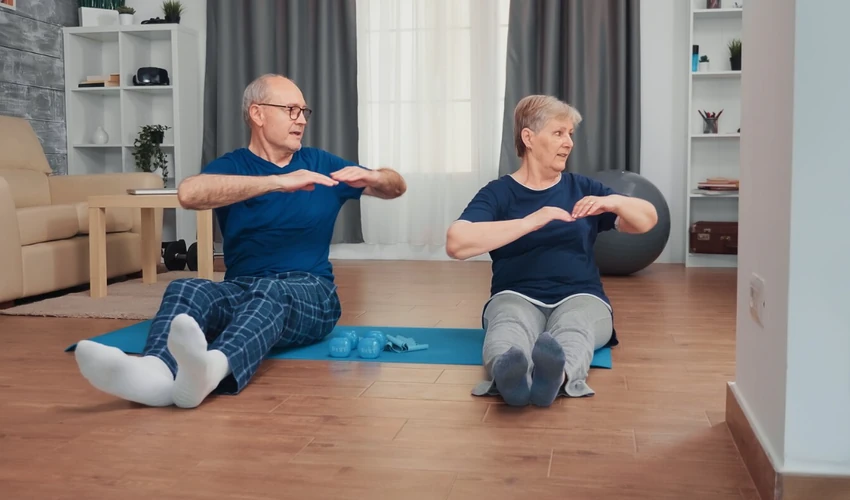
Balance exercises for older adults
Balance training can be valuable for older adults because everyday movements often require coordination, leg strength and postural control.
Suitable beginner options may include:
- Seated marching
- Supported heel raises
- Chair-assisted squats
- Standing weight shifts
- Side stepping
- Heel-to-toe stance
- Short periods of controlled walking
A stable support should always be nearby.
Anyone with a history of falls, dizziness, neurological conditions or significant weakness should seek guidance from a qualified healthcare professional before starting a new routine.
How often should you perform balance exercises?
A beginner could start with five to ten minutes, three or four days per week.
Some simple exercises may also be included in daily movement routines.
For example, you could practise heel raises while holding a countertop or complete short weight-shift exercises during a work break.
Consistency is more important than performing a long or difficult session.
As your control improves, you may gradually increase the duration or reduce the amount of hand support.
How can you make balance exercises more challenging?
Balance exercises can be progressed gradually by:
- Narrowing your stance
- Holding positions for longer
- Using less hand support
- Adding slow arm movements
- Turning your head carefully
- Stepping in different directions
- Performing movements more slowly
- Combining balance with light strength exercises
Do not close your eyes unless a qualified professional has recommended it and the environment is safe.
Common balance-training mistakes
Progressing too quickly
Moving from supported exercises to advanced balance work too soon may increase the risk of losing control.
Using an unstable object for support
Use a wall, countertop or strong chair. Avoid furniture that can move or tip.
Holding your breath
Continue breathing normally throughout each exercise.
Looking down constantly
Keep your gaze forward when possible. This can support better posture and awareness.
Ignoring dizziness or unusual symptoms
Stop if you experience dizziness, blurred vision, chest pain, numbness, sudden weakness or unusual discomfort.
Treating balance exercises as medical treatment
Balance exercises can support general fitness, but they cannot diagnose or treat an underlying medical condition.
How balance supports a complete fitness routine
Balance is one part of physical fitness.
A balanced wellness routine may also include:
- Strength training
- Cardiovascular activity
- Mobility exercises
- Flexibility training
- Coordination exercises
- Recovery
- Appropriate nutrition
- Adequate sleep
These areas can work together to support daily movement and overall wellbeing.
Final thoughts
Balance exercises can be simple, accessible and easy to include in daily life.
Start with supported exercises such as weight shifts, heel raises, marching and feet-together balance. Focus on slow, controlled movement and use a stable surface whenever necessary.
As your confidence improves, you can gradually introduce narrower stances, longer holds and more dynamic movements.
A few minutes of regular balance practice can become a useful part of a broader approach to movement, fitness and wellbeing.