
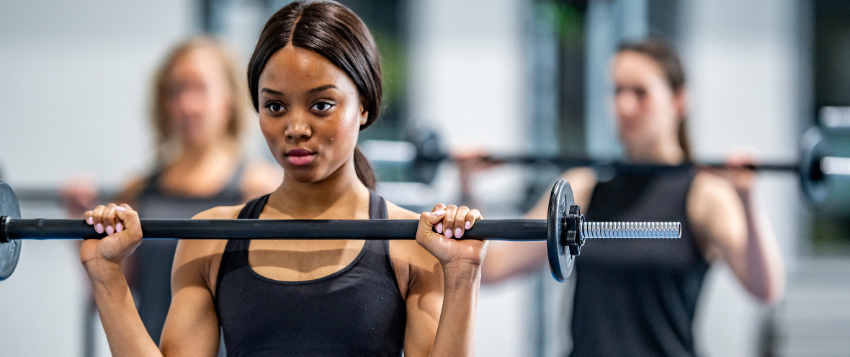
In strength training, the conversation around “core training” is often dominated by crunches, sit-ups, and planks. While these exercises have their place, they do not fully represent the true role of the core. The primary function of the core is not simply to bend the spine, but to stabilise the body and protect the spine during movement and load. This stabilising action is made possible through a process known as core bracing. Core bracing occurs when the muscles around the torso contract together to create a firm, supportive structure around the spine. Instead of drawing the stomach inward, the entire midsection tightens, forming a strong cylinder that protects the spine from excessive movement and strain.
One of the most effective and underrated ways to train this function is through loaded carries. Carries challenge the body to maintain posture, resist unwanted movement, and generate continuous core tension while moving through space. Because of this, they are often referred to as “moving planks.” By forcing the body to stabilise under load, carries naturally teach the body how to brace the core effectively, improving strength, posture, and spinal stability.
- Carries Require Continuous Core Tension

Unlike many traditional abdominal exercises where the contraction is brief and repetitive, loaded carries require the core to remain engaged for the entire duration of the movement.
When a person lifts a weight and begins walking with it, gravity immediately begins to pull the body out of alignment. The body responds by activating the abdominal muscles, obliques, and stabilising muscles of the trunk to maintain an upright position.This response creates core bracing, where the muscles around the torso contract together to support the spine. Instead of the core switching on and off between repetitions, it must remain active with every step taken during the carry.
The longer the carry lasts, the longer the core remains under tension. This extended activation builds endurance and strength in the muscles responsible for spinal stability. Over time, this improves the body’s ability to maintain posture under load, which is essential for lifting, athletic performance, and everyday activities such as carrying groceries or lifting objects from the ground
2. Carries Train the Core to Resist Movement
A common misconception about core training is that it should primarily involve bending or twisting the spine. In reality, one of the core’s most important roles is to prevent excessive or unwanted movement. When carrying weight, the body must resist several forces that attempt to pull it out of position. These forces may cause the torso to tilt sideways, rotate, or collapse forward. The core muscles must activate to counteract these forces and keep the spine stable.This ability is known as anti-movement strength. The core works to resist side bending, rotation, and excessive spinal extension or flexion. Loaded carries are particularly effective for developing this ability because the body must maintain stability while performing a dynamic task such as walking. Unlike stationary exercises, carries force the core to stabilise the body during motion, which closely reflects how the core functions in real-life movement patterns.
3. Carries Improve Spinal Stability and Lower Back Support
Lower back discomfort is one of the most common physical complaints, particularly among individuals who sit for long periods or who perform lifting tasks without proper core engagement. When the muscles of the core are weak or inactive, the lower back often compensates by carrying more load than it should. This can place additional stress on the lumbar spine and surrounding structures.
Loaded carries help address this issue by encouraging the body to create intra-abdominal pressure. This pressure develops when the core muscles contract around the abdomen, forming a stabilising brace around the spine.This internal pressure acts like a natural support system for the spine. By distributing load across the muscles of the torso instead of concentrating it on the lower back, the body becomes more efficient at maintaining spinal alignment and reducing unnecessary strain.
4. Carries Activate the Deep Core Muscles
While many abdominal exercises primarily target the superficial muscles often associated with the “six-pack,” carries engage a deeper network of muscles responsible for spinal stability and posture.
- One of the key muscles involved is the transverse abdominis. This muscle sits deep beneath the rectus abdominis and wraps horizontally around the abdomen like a natural corset. When it contracts, it compresses the abdominal cavity and contributes to intra-abdominal pressure, helping stabilise the spine during movement and lifting.
- The obliques are located along the sides of the abdomen. They consist of the internal and external oblique muscles, which assist in resisting rotation and side bending while helping maintain trunk stability during movement.
- The erector spinae run vertically along the length of the spine on both sides of the back. These muscles help keep the spine upright and assist in resisting forward collapse when the body is under load.
- Another important stabilising muscle is the multifidus. The multifidus consists of a series of small muscles that run along the spine, attaching from one vertebra to another. These muscles provide segmental stability, meaning they help control and stabilise individual spinal joints during movement.
- The quadratus lumborum is located in the lower back, between the bottom rib and the pelvis on either side of the spine. This muscle helps stabilise the pelvis and spine and plays an important role in preventing the torso from collapsing sideways when carrying uneven loads.
Together, these muscles form a coordinated system that stabilises the torso and protects the spine. Loaded carries encourage these muscles to work together continuously, strengthening the deep core in a functional and integrated way.
How to Perform Carries That Train Core Bracing
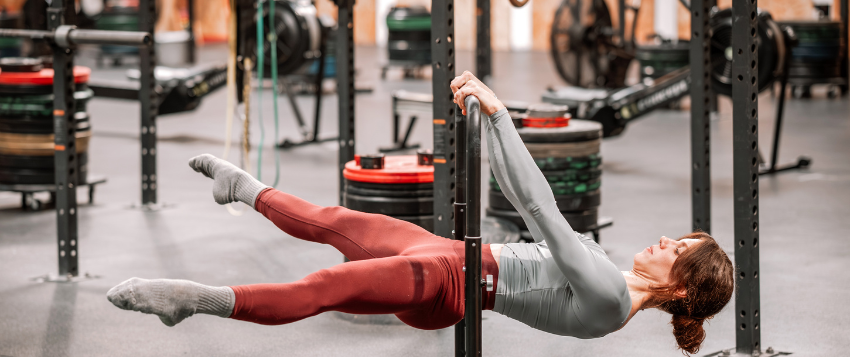
Farmer Carry
The farmer carry is one of the most effective loaded carries for building total body stability. In this exercise, a weight is held in each hand while walking forward with an upright posture and a braced core. Because the load is evenly distributed on both sides of the body, the core must work continuously to stabilise the spine and maintain proper posture. The farmer carry is highly effective for developing overall core stability, grip strength, postural control, and the ability to maintain bracing while moving under load.
Suitcase Carry
The suitcase carry involves holding a weight on only one side of the body while walking. Because the load is uneven, the core must work harder to prevent the torso from leaning toward the weight. This creates a strong anti-side bending challenge for the body. The suitcase carry is particularly effective for strengthening the obliques and the quadratus lumborum, two muscles that play an important role in stabilising the spine and pelvis during movement.
Front Carry
The front carry places the load in front of the body, typically held close to the chest. This position challenges the muscles responsible for preventing the torso from collapsing forward. To maintain an upright posture, the anterior core muscles must engage continuously. The front carry helps strengthen the abdominal muscles, improve spinal alignment, and reinforce proper posture while the body is under load.
Overhead Carry
The overhead carry is a more advanced variation where the weight is held above the head while walking. This exercise requires the body to maintain strong core tension in order to keep the spine stable while the arms are elevated. The overhead carry challenges shoulder stability, postural control, and full-body coordination. Because the weight is positioned above the body’s centre of mass, the core must work harder to maintain balance and prevent excessive movement through the spine.
Strength is not only about how much weight a person can lift, but also about how well the body can stabilise itself while carrying and controlling load. Loaded carries develop this ability by teaching the body to maintain tension, posture, and balance under resistance. Over time, the core becomes stronger, the spine becomes better supported, and movement becomes more efficient. Sometimes the most effective training methods are also the simplest: lift, brace, walk, and allow the body to develop the strength it was designed to build.